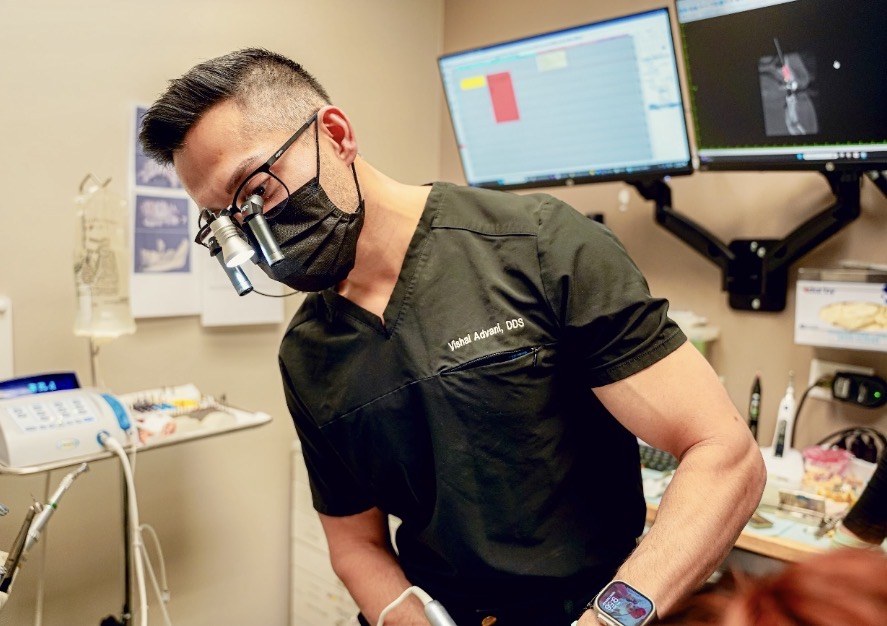
For patients with severe upper-jaw bone loss in the back of the mouth — pterygoid implants anchor in the dense pterygoid plate of the sphenoid bone, eliminating the need for sinus lifts and bone grafting in most full-arch cases. Available at the Advani Implant Institute as a routine surgical option.
Conventional dental implants anchor in the alveolar ridge — the bone that previously held your natural teeth. When that bone has resorbed (which happens within months of tooth loss), conventional placement may not be possible, and most surgeons turn to sinus lifts and bone grafting — procedures that build new bone where you don't have any.
Pterygoid implants take a fundamentally different approach. Instead of building new bone, they reach existing dense bone in a different location: the pterygoid plate of the sphenoid bone, which sits behind the maxillary sinus at the very back of the upper jaw. This bone is naturally dense, predictably present, and provides exceptional anchorage for implants.
The result: full-arch reconstruction that would otherwise require 9-12 months of grafting and waiting can often be completed in a single surgical day with same-day fixed teeth.
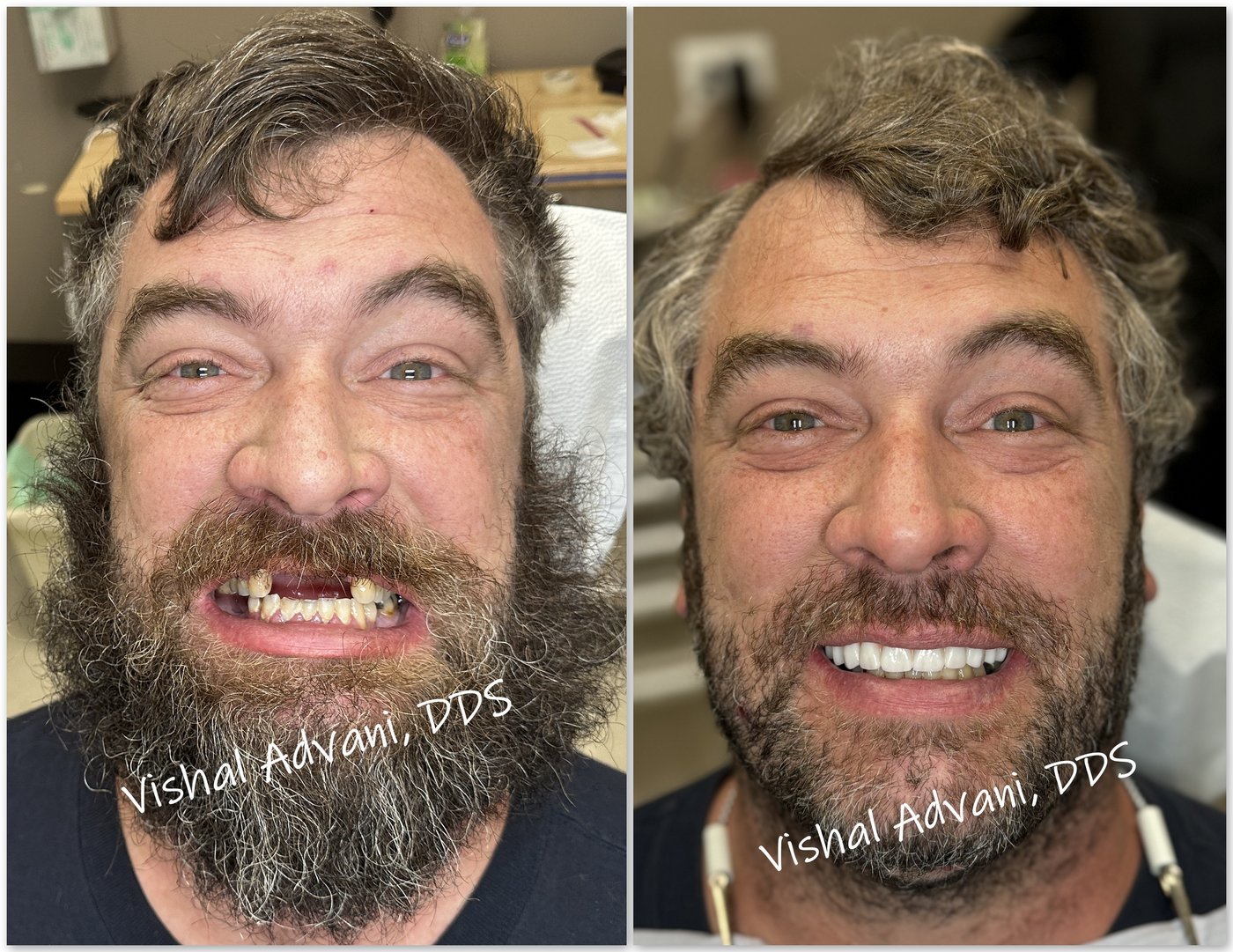
The traditional answer for severe upper posterior bone loss is a sinus lift — surgically lifting the sinus floor and packing in bone graft material. The patient then waits 6–9 months for the graft to integrate before returning for implant placement, then several more months for the implant to integrate before the final restoration.
Pterygoid implants compress that timeline dramatically. Single surgery. Same-day teeth. Final restoration in 3–6 months instead of 18–24. For patients who've already waited years to address their dental situation, the timeline difference alone is often life-changing.
Most patients who benefit from pterygoid implants share a common history: they've worn upper dentures for many years, or lost their upper back teeth long ago, and have been told by previous dentists that they need extensive bone grafting before any implant work can be considered.
Years of denture wear accelerates posterior maxillary bone loss. Pterygoid placement reaches beyond the resorbed area to native bone.
When the maxillary sinus has expanded downward into the area where back teeth used to be, leaving little or no bone, pterygoid bypasses this entirely.
If you've been quoted a treatment plan involving sinus lifts and a year-long wait, pterygoid implants often eliminate that requirement entirely.
Pterygoid placement is one of the most effective posterior anchorage strategies for upper-arch full-mouth reconstruction. Often combined with anterior implants for complete arch restoration.
For patients who can't accept an 18-24 month treatment timeline (financial, medical, or practical reasons), pterygoid implants offer a single-surgery alternative.
Pterygoid placement is a technique-sensitive procedure but a single-visit surgery. Here's exactly what to expect.
A 3D CBCT scan reveals exactly where bone exists, including the pterygoid plate and surrounding anatomy. Digital implant planning maps the precise position, depth, and angulation needed for safe and effective pterygoid placement.
Under IV sedation, the pterygoid implants are placed using X-Nav dynamic navigation — real-time visual confirmation of every drill movement against the planned position. Anterior implants are placed simultaneously for full-arch cases.
A provisional fixed bridge is delivered the same afternoon. You leave the surgical visit with a complete set of teeth that look and function naturally — no removable denture during healing.
During this period, the implants integrate with the bone. Most patients have no functional limitations during this phase. Routine check-ins ensure healing is on track.
Once integration is confirmed, the final permanent zirconia bridge is fabricated and delivered. This is your long-term restoration — designed to last decades with proper maintenance.
A complimentary consultation includes a CBCT scan that will tell us exactly what's possible — and whether pterygoid placement, conventional implants, or a combination is right for your specific anatomy.