Now Accepting New Patients · Complimentary Implant Consultations
Single Tooth Replacement

Single Tooth Implants

The most natural way to replace a missing or failing tooth — a permanent implant that looks, feels, and functions exactly like a real tooth. Performed with X-Nav dynamic navigation, TRIOS digital scanning, in-house CAD/CAM design, and 5-axis milled zirconia crowns.

Permanent Solution
Same-Visit Crown
X-Nav Guided
Hospital-Based Care
At a Glance
Single Implant Treatment
  • Procedure Time ~60 minutes
  • Surgical Guidance X-Nav Dynamic
  • Crown Material Zirconia / e.max
  • Healing 3–4 months
  • Lifespan Decades+
  • Starting From $3,500
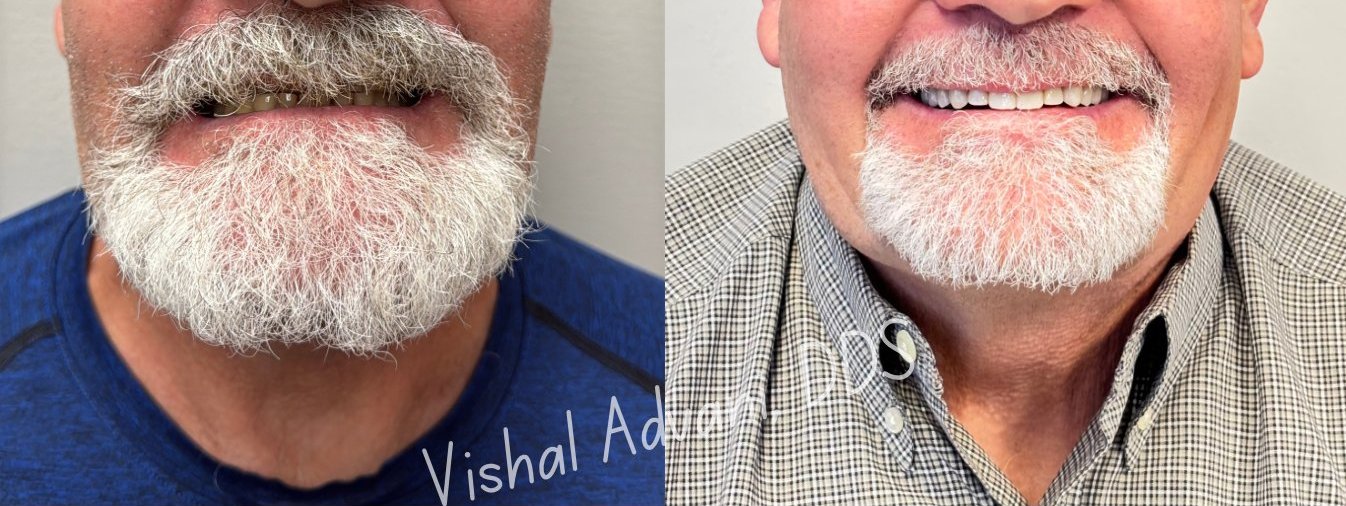
Single tooth implant final result
Understanding Single Implants

A real tooth, permanently restored.

A single tooth implant has three components: a titanium implant (the artificial root) placed into the jawbone, an abutment (the connector), and a crown (the visible tooth). Once integrated, the implant functions exactly like a natural tooth — you eat, speak, and clean it like any other tooth.

What separates a great single implant from an average one comes down to placement precision and aesthetic execution. The implant must be placed at the exact angle, depth, and position that allows the final crown to look natural, function properly, and remain healthy for decades. Sub-optimal placement creates problems that no amount of beautiful prosthetic work can fix.

The implant is the foundation. The crown is the visible result. Get the foundation right, and everything else becomes possible.

At the Advani Implant Institute, single implants are placed using X-Nav dynamic navigation for sub-millimeter precision, planned with 3D CBCT imaging, and restored using TRIOS digital scanning combined with in-house CAD/CAM design and 5-axis milled zirconia crowns for proven long-term durability.
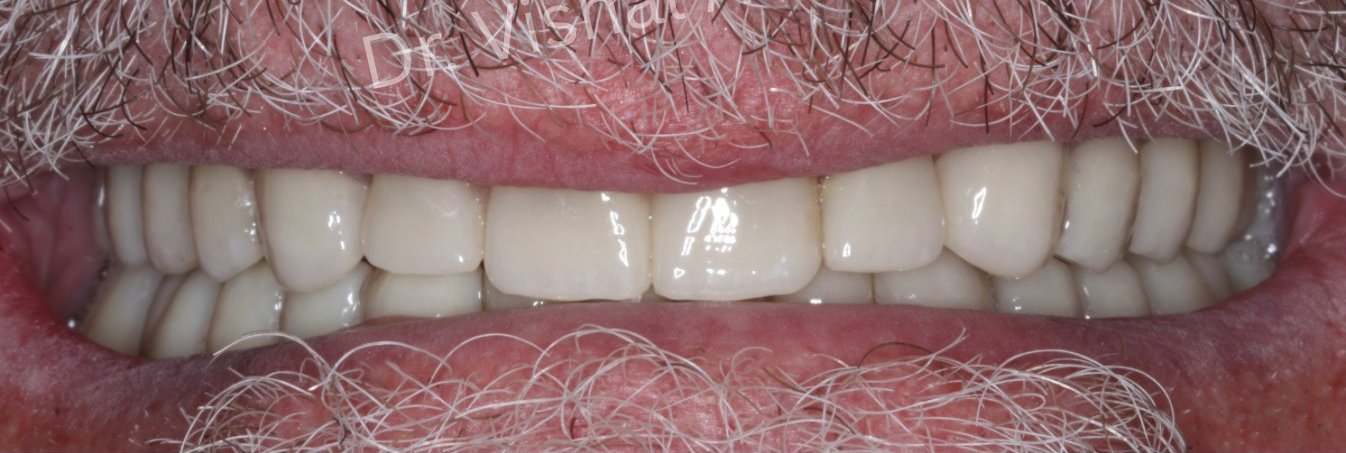
Single implant restoration with surrounding natural teeth
vs. Bridges & Partials

Why an implant beats the alternatives.

For decades, the standard answers for a single missing tooth were either a three-unit bridge (which requires reducing the two adjacent healthy teeth) or a removable partial denture. Both have significant drawbacks compared to a modern implant.

  • I

    No damage to neighbors

    A bridge requires drilling down two healthy teeth to support the missing one. An implant doesn't touch the surrounding teeth — they remain pristine.

  • II

    Bone preservation

    When a tooth is missing, the bone underneath disappears over time. An implant stimulates the bone like a natural tooth root — preserving the foundation indefinitely. Bridges and partials don't do this.

  • III

    Permanent vs. replaceable

    A typical bridge needs replacement every 10-15 years. A properly placed implant is designed to last a lifetime. The crown may need eventual replacement, but the implant itself is permanent.

  • IV

    Easier daily care

    An implant cleans like a natural tooth — brush and floss normally. Bridges require special floss threaders and water flossers. Partial dentures require nightly removal and cleaning.

  • V

    No movement

    Removable partial dentures shift when eating and speaking. An implant doesn't move — it's anchored in bone, just like a real tooth.

Treatment Workflow

From consultation to final crown.

Most single implant cases follow a predictable timeline. Here's exactly what to expect.

Step One · Consultation

Diagnostic & Planning

A 3D CBCT scan reveals the bone, anatomy, and any pathology. A digital intraoral scan captures the surrounding teeth. Your specific implant position is planned digitally, and the predicted result is reviewed with you.

I
II
Step Two · Surgery Day

Implant Placement

Under local anesthesia (or IV sedation if preferred), the implant is placed using X-Nav dynamic navigation. Most single implant placements take 60 minutes or less. A healing cap or temporary crown is placed depending on the location and case complexity.

Step Three · Healing

3–4 Month Osseointegration

During this period, the implant integrates with the bone. Most patients have no functional limitations. Routine check-ins ensure healing is on track.

III
IV
Step Four · Crown Visit

Final Restoration

Once integration is confirmed, a digital scan captures the implant position. The crown is designed in-house using CAD/CAM software and milled from solid zirconia using 5-axis milling — producing a custom crown engineered for both aesthetics and proven long-term durability.

Common Questions

Single tooth implants answered.

  • How much does a single tooth implant cost?+
    A single tooth implant with crown typically ranges from $3,500-$5,500 depending on case complexity, materials, and whether bone grafting is needed. The implant itself, abutment, and crown are usually billed separately. Specific pricing is reviewed transparently at your consultation. Financing options through CareCredit, Cherry, and Proceed Finance are available.
  • Does insurance cover single implants?+
    Many dental insurance plans cover at least a portion of single implant treatment, particularly when the missing tooth is functional (not purely cosmetic). Coverage varies widely — some plans cover the crown but not the implant; others have annual maximums that limit total benefits. We help patients verify coverage and maximize available benefits at consultation.
  • How painful is a single implant?+
    Most patients are surprised by how comfortable single implant placement is. The procedure is performed under local anesthesia (IV sedation available if preferred). Post-operative discomfort is typically mild — most patients manage with over-the-counter ibuprofen for 1-2 days. Many compare it favorably to a tooth extraction.
  • How long do single implants last?+
    The implant itself is designed to last a lifetime — most properly placed implants are still functioning 20+ years later in published clinical studies. The crown that sits on top typically lasts 10-20 years and may eventually need replacement, but the implant remains in place.
  • Will my implant tooth look natural?+
    Yes — when planned and executed properly. Modern zirconia and e.max crowns are designed to match your natural tooth color, translucency, and shape. For visible-zone teeth (the front), additional aesthetic considerations apply, and FP1 surgery with biological preservation may be the better choice for the most refined result. Learn more about FP1 surgery →
  • Can I get a same-day implant?+
    In many cases, yes. For a failing tooth that needs to come out, immediate placement (extraction and implant placement at the same visit) is often possible — especially in non-aesthetic zones. For aesthetic zones, anterior immediate placement or FP1 surgery may be the right approach. The CBCT and consultation determine which approach is safest and most predictable for your situation.
  • Are there any age limits?+
    Implants typically aren't placed in young patients before jaw growth is complete (around 18-21 for most patients). On the older end, there's no age limit — health status matters more than age. Many of our patients are in their 70s and 80s. The CBCT and medical history evaluation determines candidacy.
Your Next Step

Replace one tooth, or save the rest.

A complimentary consultation includes a CBCT scan and a transparent treatment plan. Whether you have a single failing tooth or need a comprehensive plan for multiple, the conversation gives you clarity on every option available.